
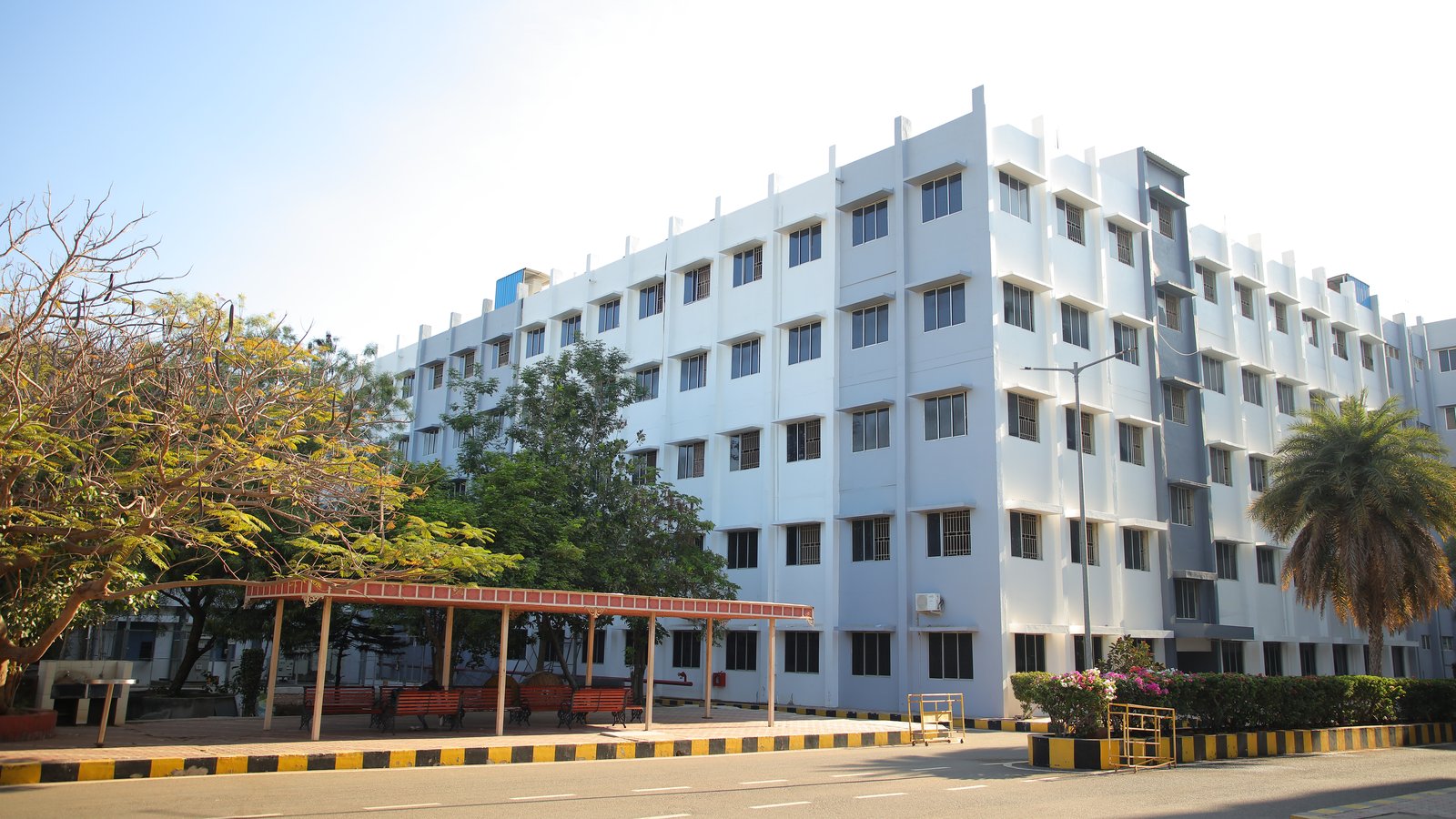
KR–Industry Institute Partnership Centre · IIPC
Where industry meets the institute.
To strengthen industry–academia collaboration by fostering innovation, UG research publications and sustainable development through strategic partnerships — for globally competent, socially responsible graduates.
The Centre
Partnerships & Outcomes
Overview
Partnerships that carry the classroom into industry.
In the contemporary globalized education ecosystem, collaboration with international universities and industries plays a pivotal role in enhancing the quality of education, research, innovation and employability. Recognizing this importance, the institution is committed to fostering strategic partnerships with reputed international universities and industry organizations.
The IIPC policy provides a structured framework to initiate, implement and sustain collaborations that contribute to academic excellence, research advancement, and the holistic development of students and faculty.
What the Centre Covers
Industry Partnerships
MoUs with industries, research organizations and professional bodies.
International Links
Collaborations with reputed universities abroad.
Research & Publications
Scopus / Web of Science papers, patents and funded projects.
SDG Cell
Sustainability embedded in teaching, research and outreach.
Innovation & Startups
Incubation, prototypes and technology transfer.
Student & Faculty Growth
Internships, industrial visits, expert lectures and FDPs.
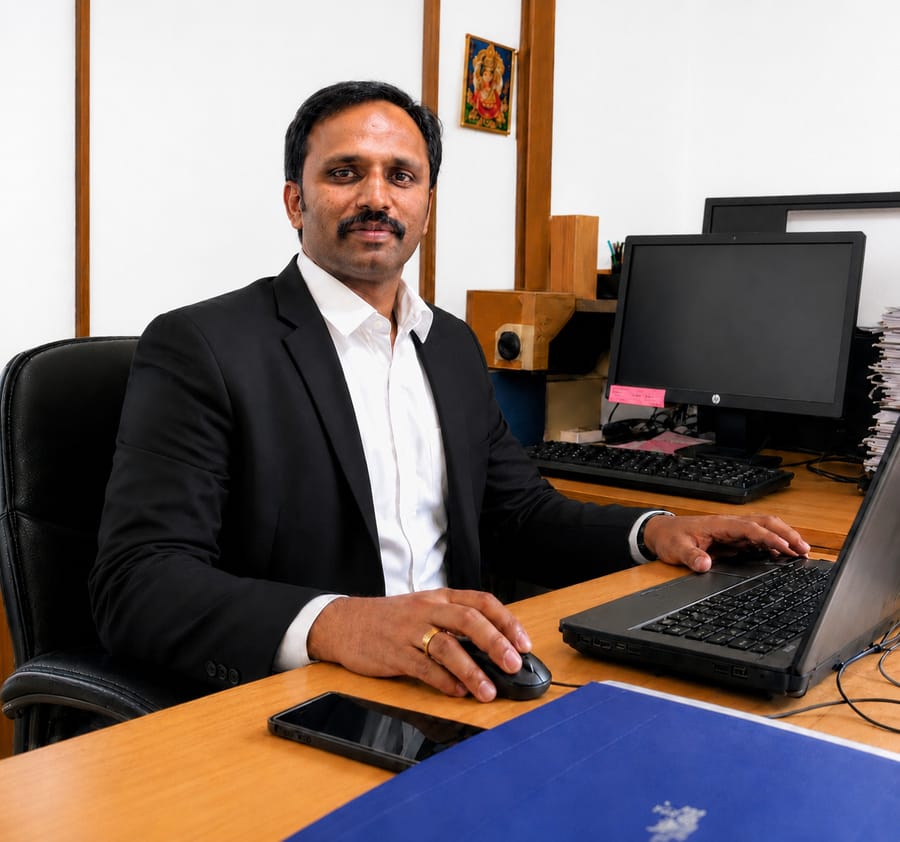
From the Head
Dr. S. Saravanan
M.E., Ph.D. · Professor & Head, IIPC–CFFA
“It is our endeavour to establish a vibrant ecosystem that seamlessly integrates industry collaboration, research excellence, innovation and sustainable development to address the evolving needs of society and the global economy.”
The Centre serves as a strategic platform for fostering meaningful partnerships with industries, research organizations, government agencies and professional bodies, while promoting high-quality research, scholarly publications, technology transfer and innovation-driven initiatives.
With a strong commitment to the United Nations Sustainable Development Goals (SDGs), the Centre strives to embed sustainability into academic, research and outreach activities, thereby creating lasting societal impact.
By nurturing a culture of collaboration, interdisciplinary research, entrepreneurship and lifelong learning, we aim to develop globally competent, ethically responsible and industry-ready graduates, while contributing to institutional excellence, technological advancement and sustainable national development.
IIPC
Framework and policy.
The Centre works to a written policy for international university and industry collaboration — covering scope, benefits, implementation, roles, monitoring and reporting.
Vision
To strengthen industry–academia collaboration for knowledge exchange, innovation and technological advancement.
To promote excellence in research and scholarly publications through collaborative and interdisciplinary research initiatives.
To integrate the United Nations Sustainable Development Goals (SDGs) into education, research, innovation and community engagement.
To foster innovation, entrepreneurship and technology transfer that address industrial and societal challenges.
To develop globally competent, industry-ready and socially responsible graduates through experiential learning and strategic partnerships.
Mission
To strengthen industry–academia collaboration by promoting innovation, research, skill development, entrepreneurship and sustainable development through strategic partnerships — thereby preparing globally competent and socially responsible graduates.
Objectives of the Policy
To establish mutually beneficial collaborations with international universities and industries.
To enhance academic and research quality through global exposure.
To promote student-centric learning through internships, projects and industrial training.
To facilitate faculty development through exchange programmes, visits and joint research.
To improve placement opportunities and the industry readiness of students.
To organize collaborative events such as workshops, seminars, FDPs and conferences.
Key Deliverables
Industry partnerships and MoUs with leading industries, research organizations and professional bodies.
Research publications in reputed Scopus, Web of Science and peer-reviewed journals, along with conference publications.
Funded research projects, consultancy and patents leading to technology development and commercialization.
SDG-oriented projects and outreach activities aligned with the United Nations Sustainable Development Goals.
Industrial visits, internships, expert talks, workshops and FDPs for students and faculty.
Innovation, startup and incubation support resulting in prototypes, products and entrepreneurial ventures.
Industry-ready graduates equipped with technical, research, innovation and sustainability competencies.
Policy Document
Constitution of the Centre
The people behind IIPC.
Head
Dr. S. Saravanan
Professor · Head, IIPC–CFFA
Coordinator
Dr. R. Jai Ganesh
Assistant Professor · Electrical & Electronics Engineering
Members
Mr. M. Raja
Assistant Professor · ECE
Mrs. S. Keerthana
Assistant Professor · CSE
Mrs. S. Geetha
Assistant Professor · AI & DS
Mr. R. Roshan Joshua
Assistant Professor · AI & ML
Mr. K. B. Hariharan
Assistant Professor · Mechanical
Mr. G. Ramachandran
Assistant Professor · Civil
Mr. K. Saravana Kumar
Assistant Professor · Mathematics (S&H)
International Collaborations
Working with universities across borders.
Joint academic programmes, expert sessions by international academicians, collaborative research and global exposure for students and faculty — the Centre's international engagements bring world classrooms to Samayapuram.
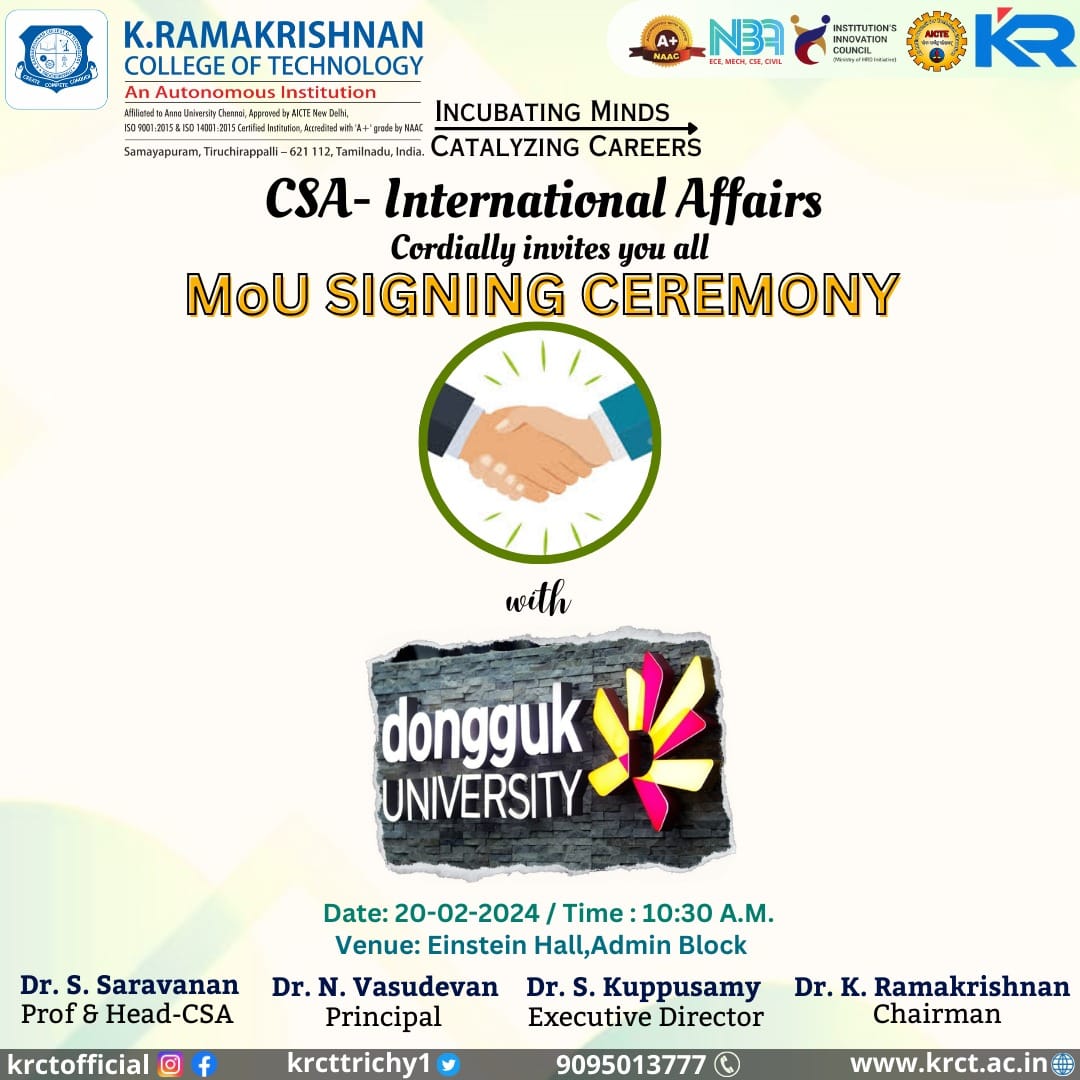
20 February 2024
MoU Signing Ceremony — Dongguk University, South Korea
Held at Einstein Hall, Admin Block, in the presence of the Chairman, Executive Director and Principal.
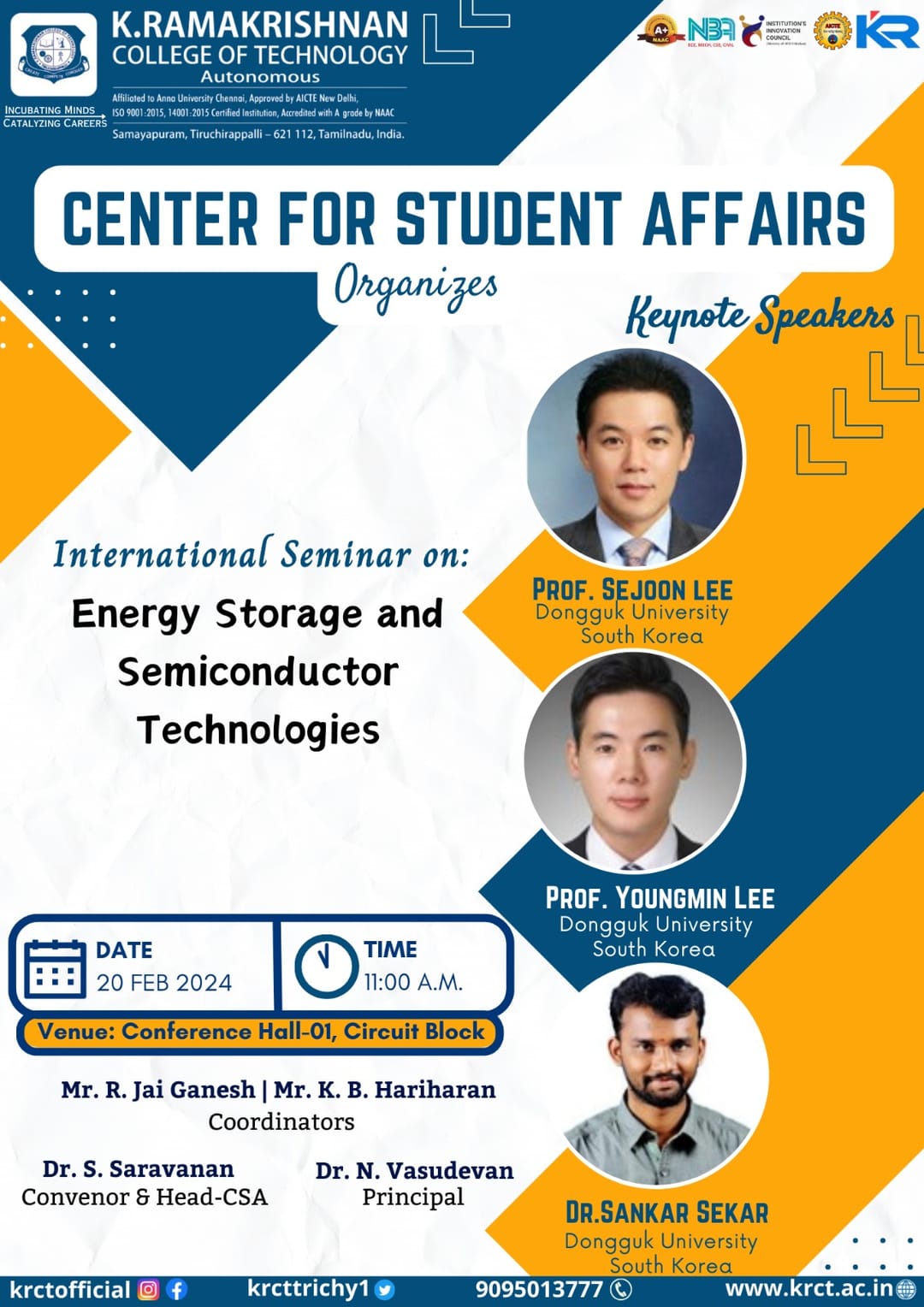
20 February 2024
International Seminar on Energy Storage and Semiconductor Technologies
Keynote speakers Prof. Sejoon Lee, Prof. Youngmin Lee and Dr. Sankar Sekar of Dongguk University, South Korea — Conference Hall 01, Circuit Block.
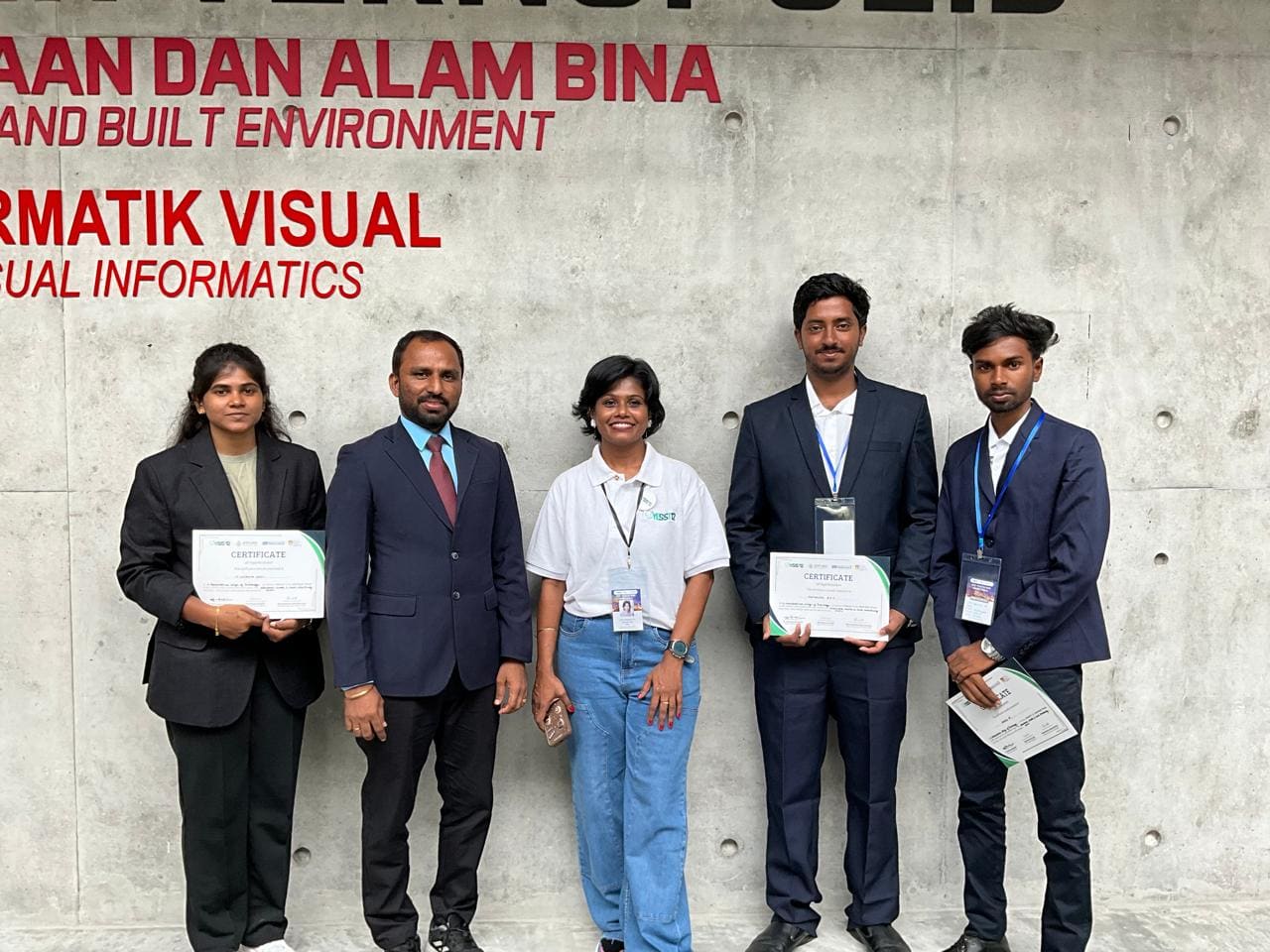
August 2025
International Conference Participation — Malaysia
Students and faculty presented their work and received certificates of participation at a partner campus in Malaysia.
MoUs Signed
Agreements that open doors.
Every partnership begins with a Memorandum of Understanding — and continues as internships, live projects, joint research and recruitment.
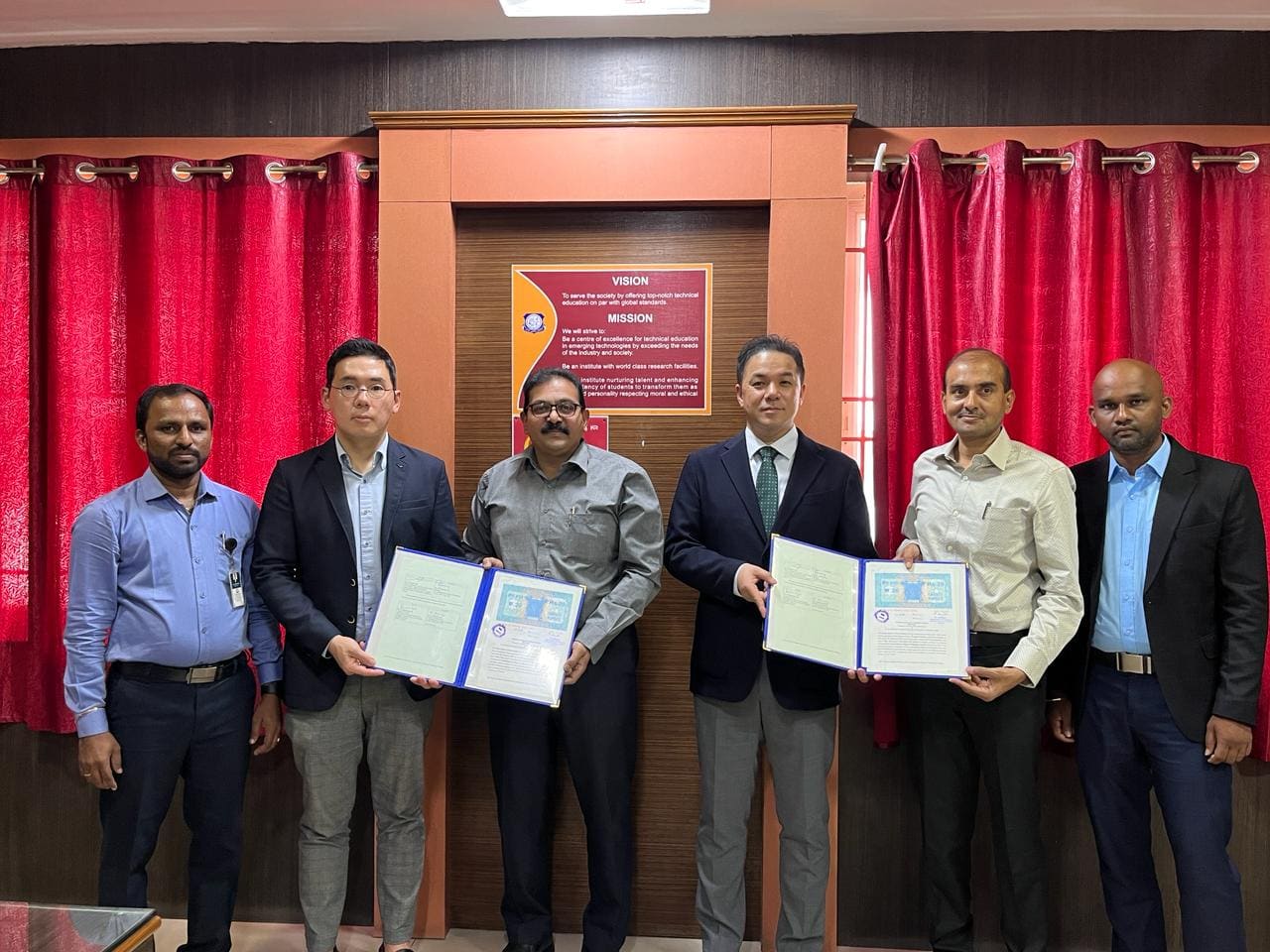
Dongguk University, South Korea
MoU exchanged with the visiting delegation on 20 February 2024.
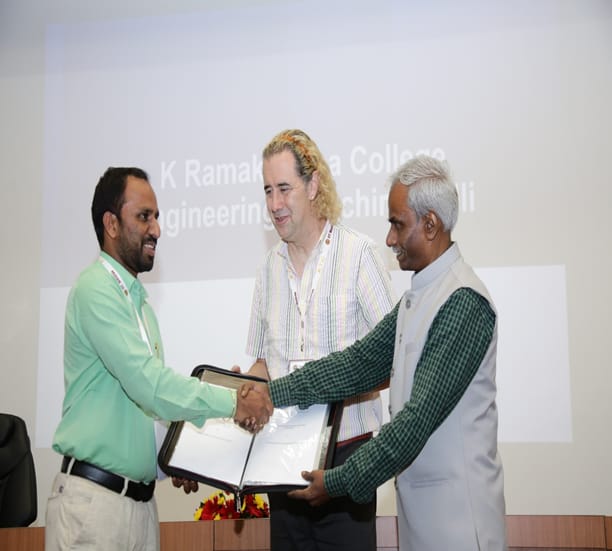
IIT Madras
Memorandum of Understanding exchanged for collaborative research and student engagement.
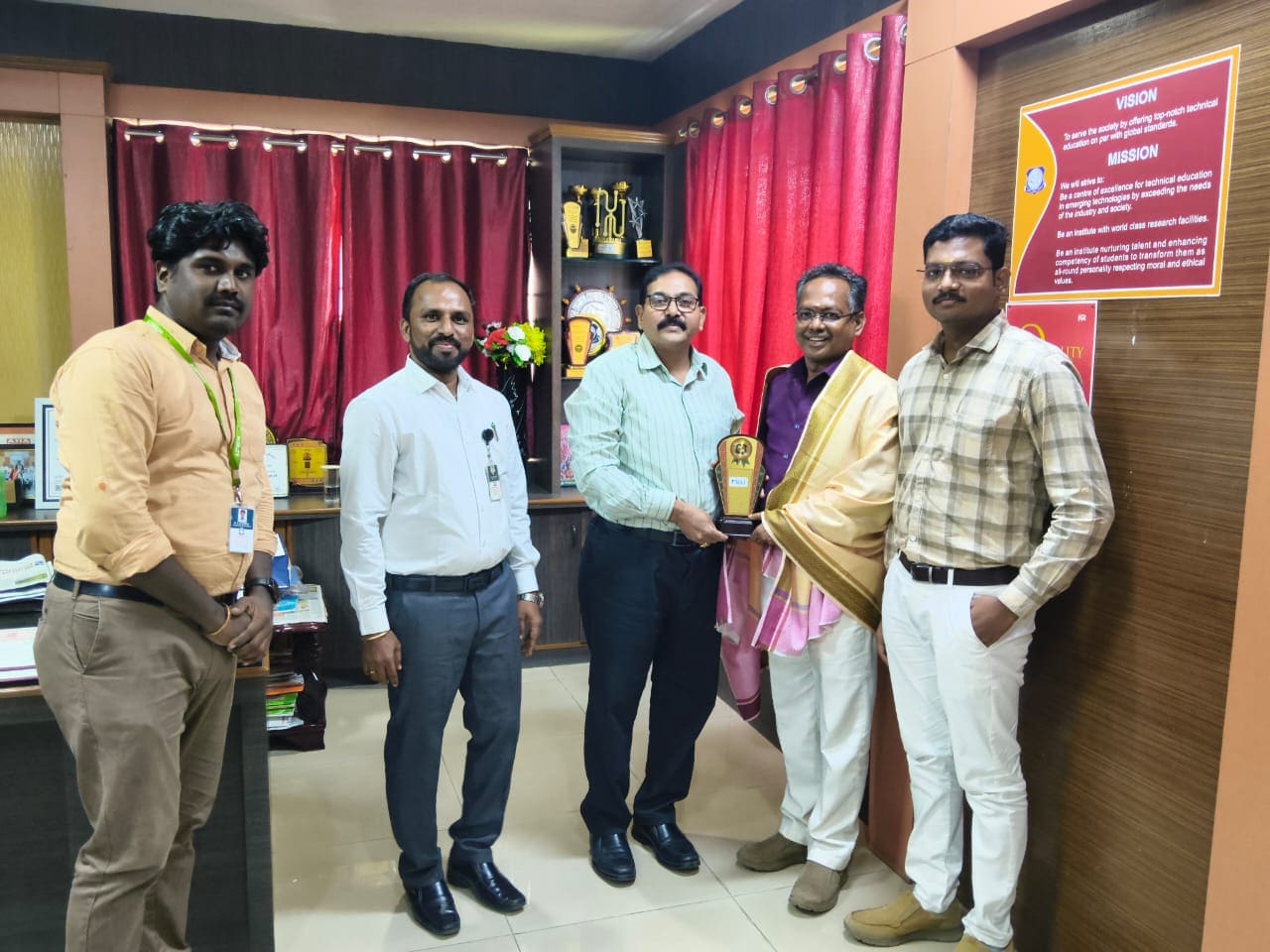
Partner Visit — November 2025
A partner representative felicitated at the campus during an MoU engagement.
SDG Cell
Sustainability, built into everything.
In alignment with the global vision of the United Nations Sustainable Development Goals, the institution is committed to fostering sustainable development through education, research, innovation and community engagement. The SDG Cell — established under IIPC — systematically integrates SDG principles into all institutional functions.
It operates under a structured committee chaired by the Principal, with SDG coordinators, heads of centres and departments, faculty members, student representatives and external members from industry and NGOs.
Vision
To transform the institution into a sustainability-driven centre of excellence, contributing to global SDG achievement through education, research and societal engagement.
Mission
To embed SDG principles into the academic curriculum, research and institutional practices.
To promote environmental responsibility, social equity and economic sustainability.
To develop socially responsible engineers aligned with sustainable development.
Objectives
Promote awareness and understanding of the SDGs among stakeholders.
Integrate SDGs into curriculum design, teaching–learning and research.
Encourage interdisciplinary projects addressing real-world sustainability challenges.
Strengthen community engagement through outreach programmes.
Promote green campus initiatives and resource conservation practices.
Establish collaborations with industries, NGOs and government bodies for SDG initiatives.
Strategic Implementation Framework
Academic Integration
SDG concepts in curriculum and course outcomes, project-based learning on sustainability themes, and the use of data analytics, simulation and AI for sustainability solutions.
Research & Innovation
Research in renewable energy, smart grids, waste management and environmental monitoring; patents, publications and funded projects aligned with the SDGs.
Campus Sustainability
Solar systems and energy audits, rainwater harvesting and a sewage treatment plant, waste segregation and composting, tree plantation and eco-friendly transport.
Community Engagement
Outreach through NSS, NCC and Unnat Bharat Abhiyan — health camps, environmental awareness and rural development programmes.
Industry & Collaboration
Partnerships with industries, NGOs and academic institutions; internship and consultancy opportunities in sustainability projects.
Monitoring & Reporting
Bi-annual review meetings, KPIs for SDG activities, impact analysis and an annual SDG report.
SDG Cell · Subsection
Unnat Bharat Abhiyan.
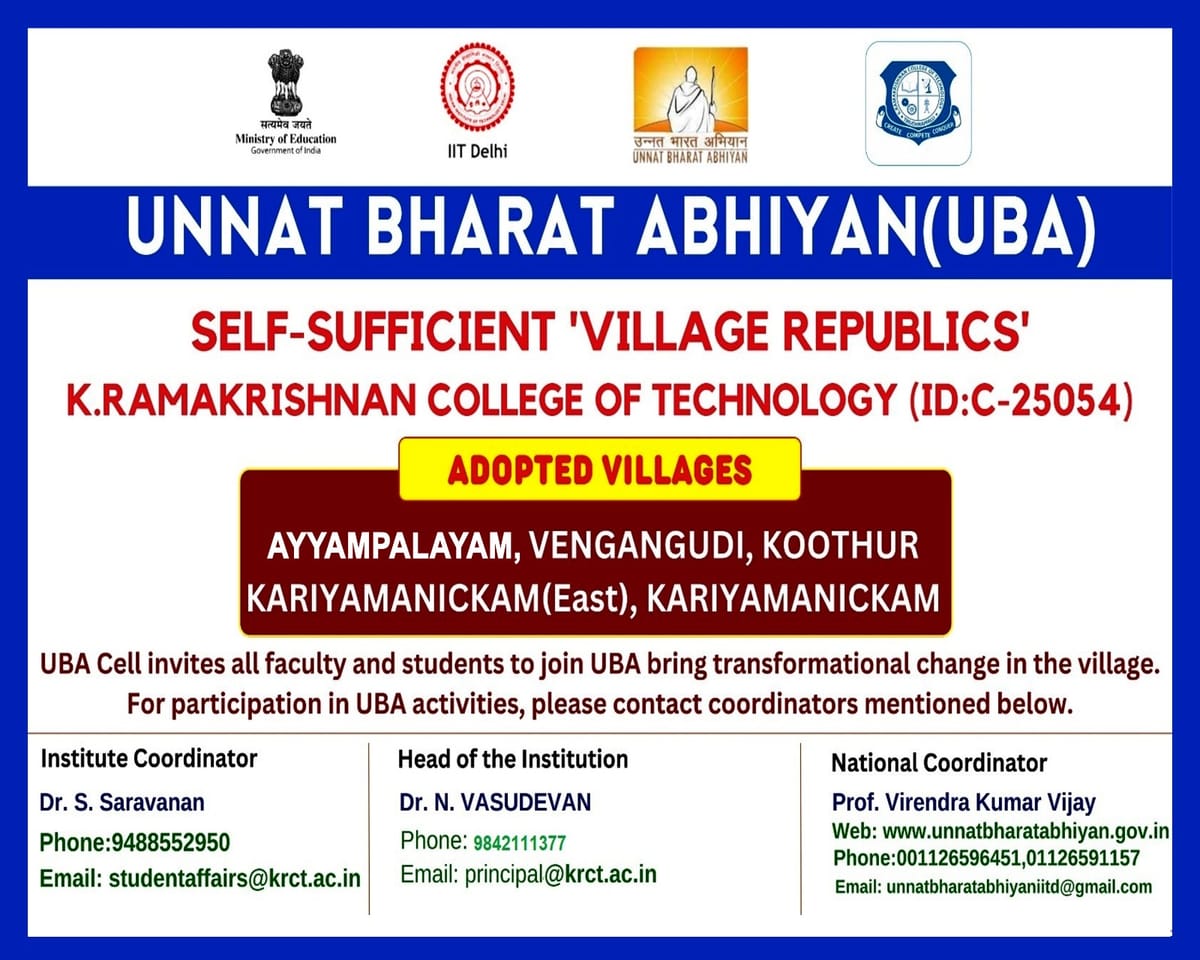
Unnat Bharat Abhiyan is a Ministry of Education programme, coordinated nationally by IIT Delhi, that connects higher education institutions with rural India to identify development challenges and evolve appropriate solutions for sustainable growth.
KRCT participates as institution ID C-25054 under the theme of self-sufficient “village republics”, working with five adopted villages. The UBA Cell invites all faculty and students to join in bringing transformational change to these villages.
Adopted Villages
Annual Reports
UBA Coordinators
UG Research Publications
From final-year project to published paper.
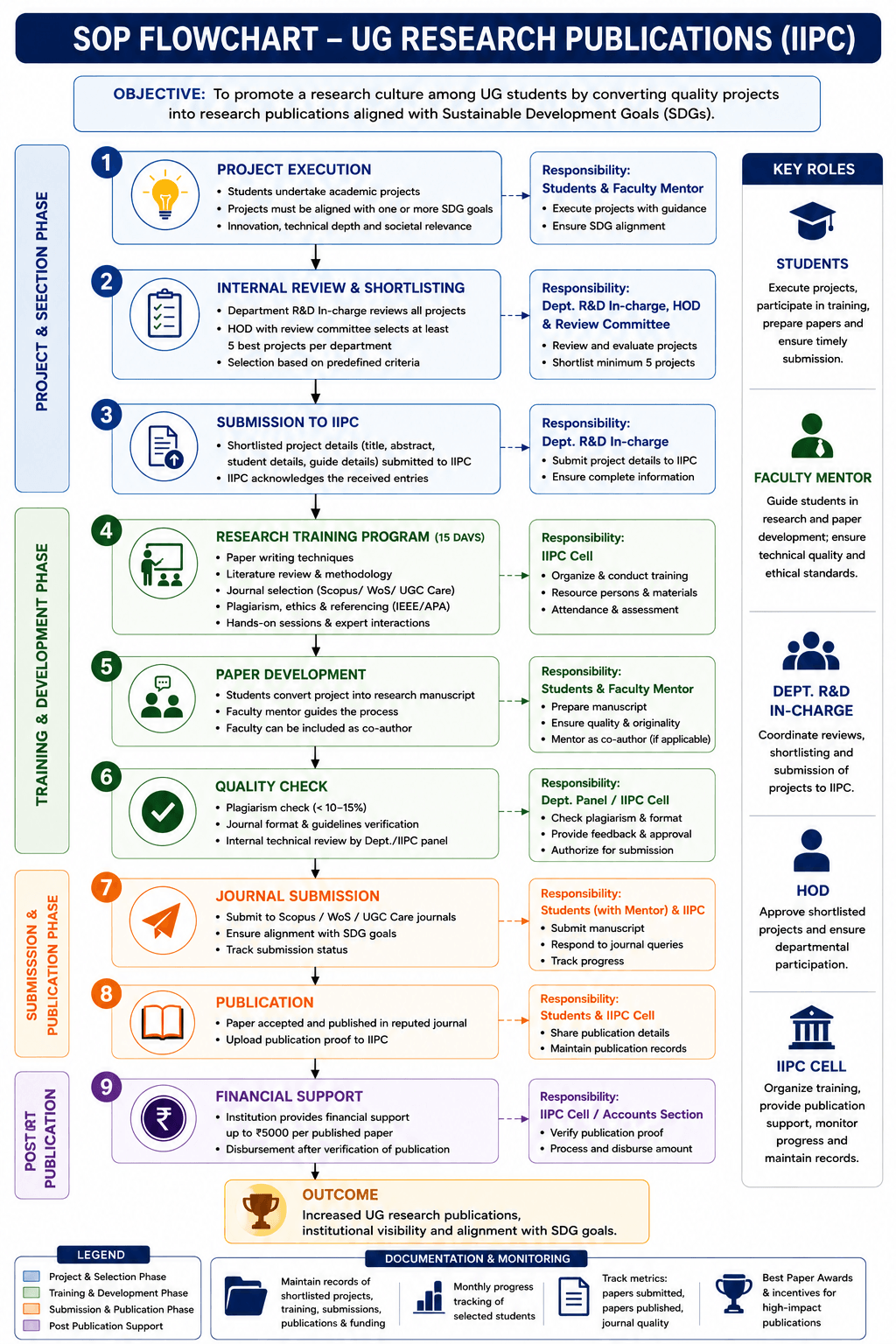
A standing procedure turns strong undergraduate projects into quality research publications aligned with the Sustainable Development Goals. It applies to all UG students and faculty across AI & DS, AI & ML, IT, CSE, Civil, Mechanical, ECE and EEE.
Process Flow
Step 01
Project Execution
Each department ensures student projects align with one or more SDGs and demonstrate innovation, societal relevance and technical depth.
Step 02
Internal Review & Shortlisting
The Department R&D In-charge reviews every project; the HoD and review committee shortlist at least five best projects per department on innovation, SDG alignment, practical implementation and scope for publication.
Step 03
Submission to IIPC
Shortlisted project details — title, abstract, student and guide details — are submitted to the IIPC Cell.
Step 04
Research Training Programme
A 15-day intensive programme on paper writing, literature review, journal selection (Scopus / WoS / UGC CARE), plagiarism tools, referencing (IEEE / APA) and ethical publishing.
Step 05
Paper Development
Students convert the project into a manuscript under faculty mentorship; faculty may be included as co-authors based on contribution.
Step 06
Quality Check
Plagiarism must stay below 10–15%, the paper must meet journal formatting guidelines, and an internal technical review by the IIPC / department panel precedes submission.
Step 07
Journal Submission
Papers go to Scopus-indexed journals (preferred), or Web of Science / UGC CARE journals — all aligned with SDG themes.
Step 08
Publication Support
On successful publication, the institution provides financial support of up to ₹5,000 per paper, disbursed after verification of the publication proof.
Roles and Responsibilities
Students
Execute projects aligned with the SDGs and take an active part in training and paper writing.
Faculty Mentor
Guide the research work and paper preparation, and ensure technical quality and ethical standards.
Department R&D In-charge
Coordinate project reviews and shortlisting, and monitor the progress of selected students.
Head of the Department
Approve shortlisted projects and ensure departmental participation.
IIPC Cell
Organize training programmes, provide journal guidance and support, and track publication outcomes.
SOP Flowchart
Annual Timeline — Two-Semester Cycle
Semester 1 — July to December
| Month | Activity |
|---|---|
| July | Project allocation & SDG orientation |
| August | Project progress review (department level) |
| September | Internal evaluation & shortlisting (top 5 projects per department) |
| October — 1st half | Submission to IIPC |
| October — 2nd half | 15-day Research Training Programme |
| November | Paper drafting & mentoring |
| December | Internal review & plagiarism check |
Semester 2 — January to June
| Month | Activity |
|---|---|
| January | Journal submission |
| February | Review of submitted papers & corrections |
| March | Paper submission / revisions |
| April | Paper submission / revisions |
| May | Publication tracking & funding support disbursement |
| June | Publication tracking & funding support disbursement |
Activities
What the Centre runs.
Interaction sessions with industry, national innovation platforms, science festivals and project reviews — the everyday work of connecting students with the world outside the classroom.
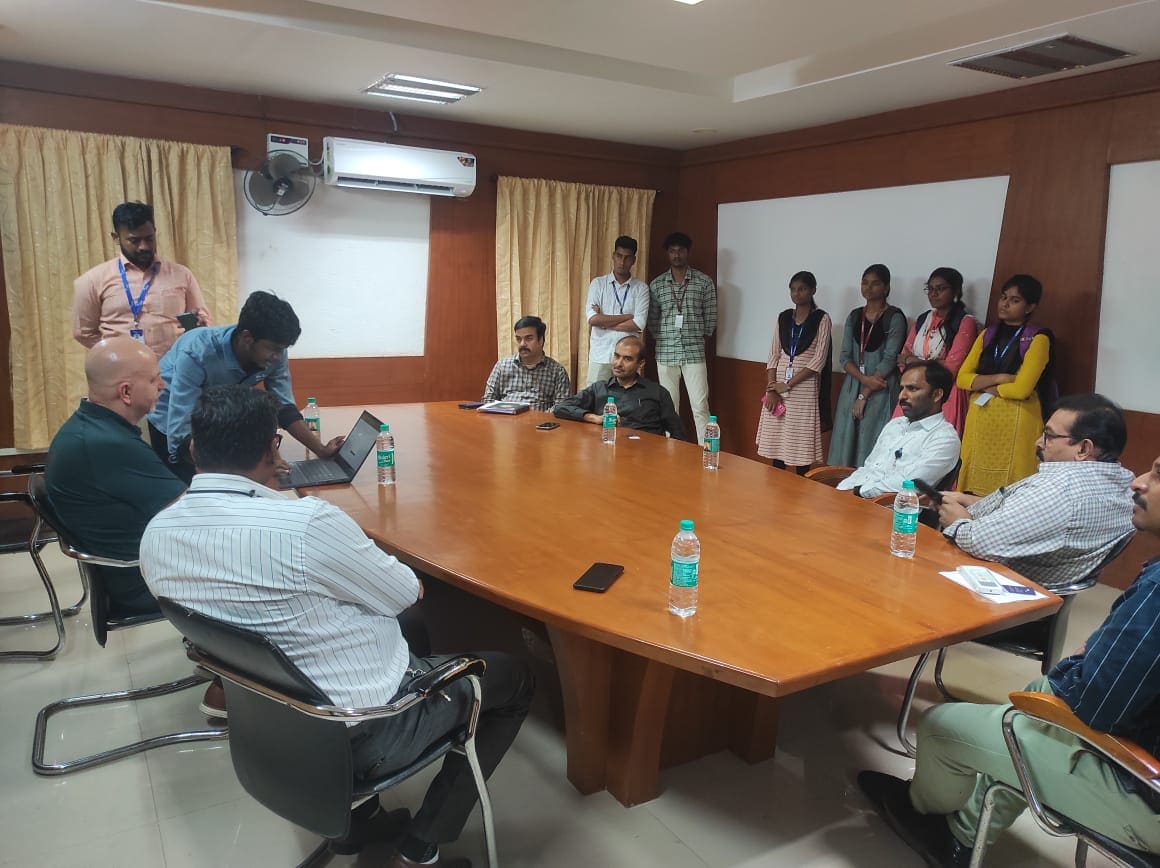
November 2022
Industry–Institute Interaction Session
Industry representatives meeting faculty and students on campus to scope internships, projects and collaboration.
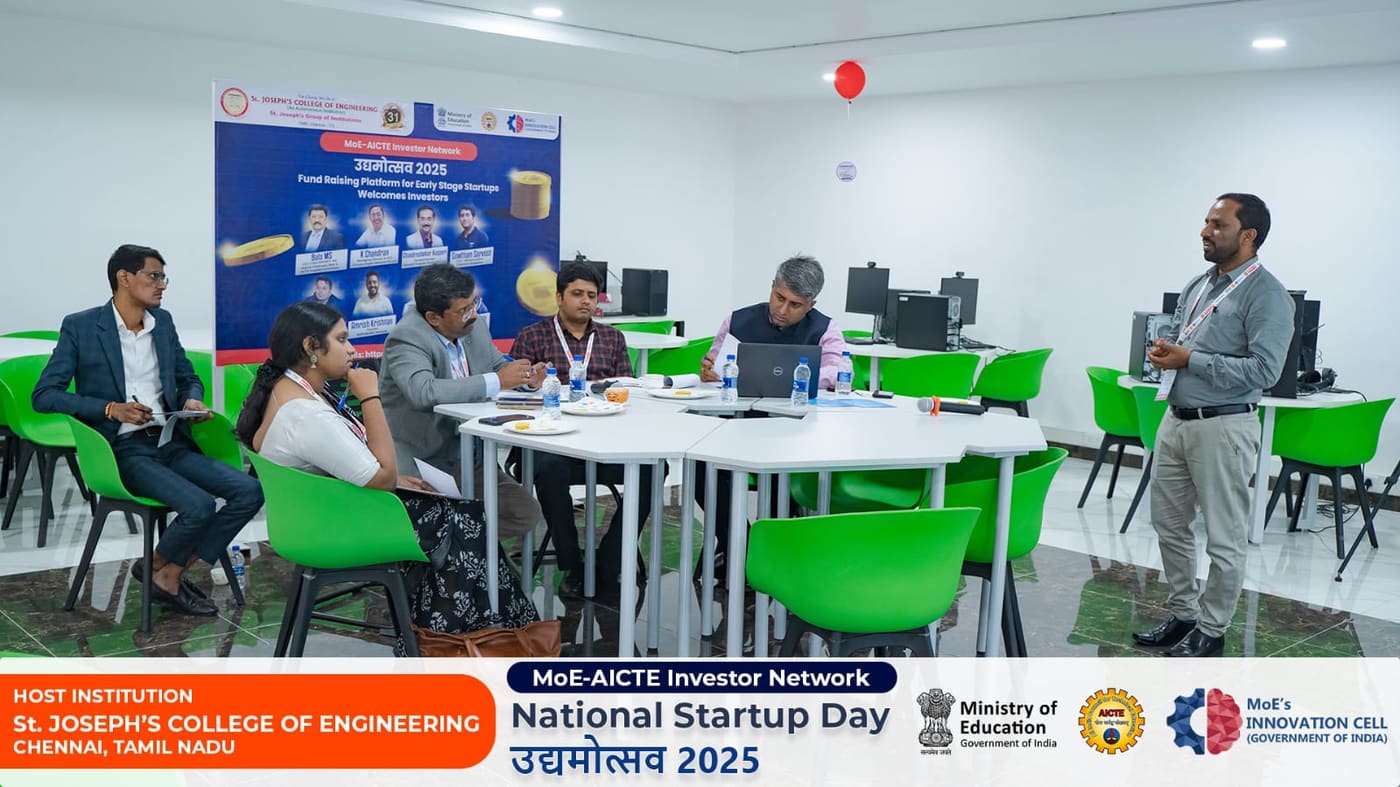
January 2025
National Startup Day (Udyamotsav) 2025
MoE–AICTE Investor Network fund-raising platform for early-stage startups, hosted by St. Joseph's College of Engineering, Chennai.
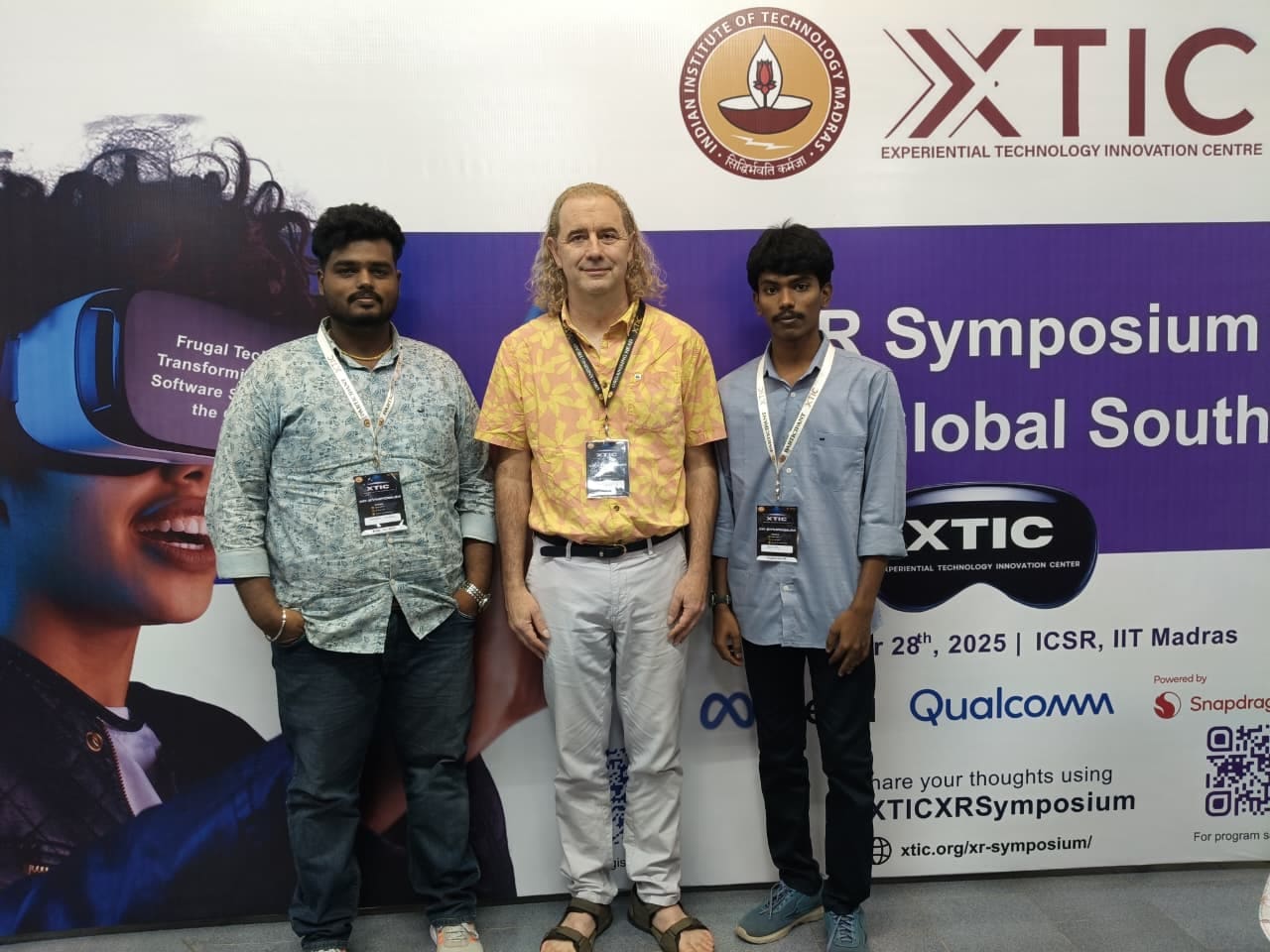
28 November 2025
XR Symposium for the Global South — IIT Madras
Students attended the symposium at XTIC, the Experiential Technology Innovation Centre, ICSR, IIT Madras.
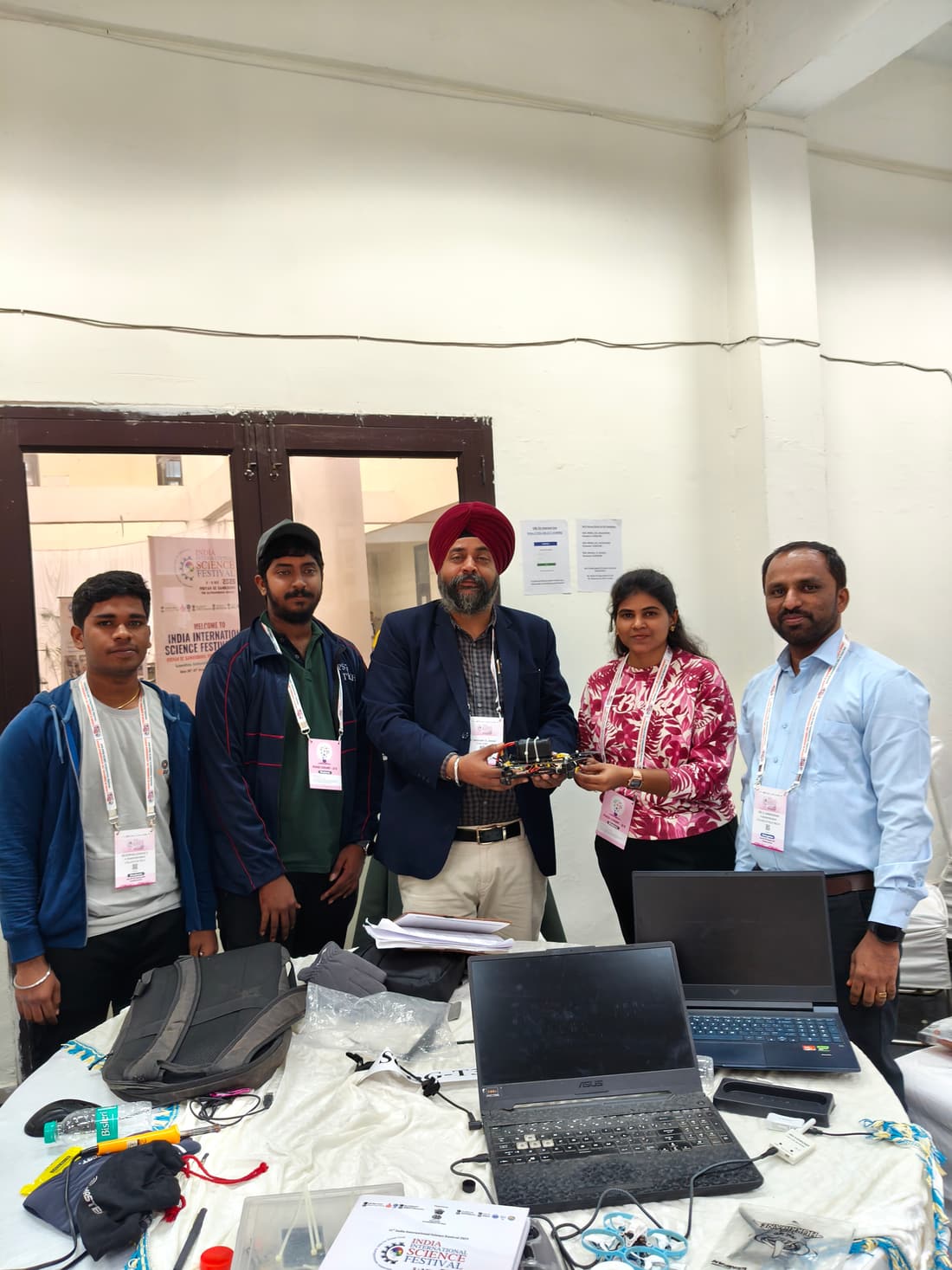
December 2025
India International Science Festival
Students demonstrated their working prototype to visiting experts at the festival exhibition.
November 2025
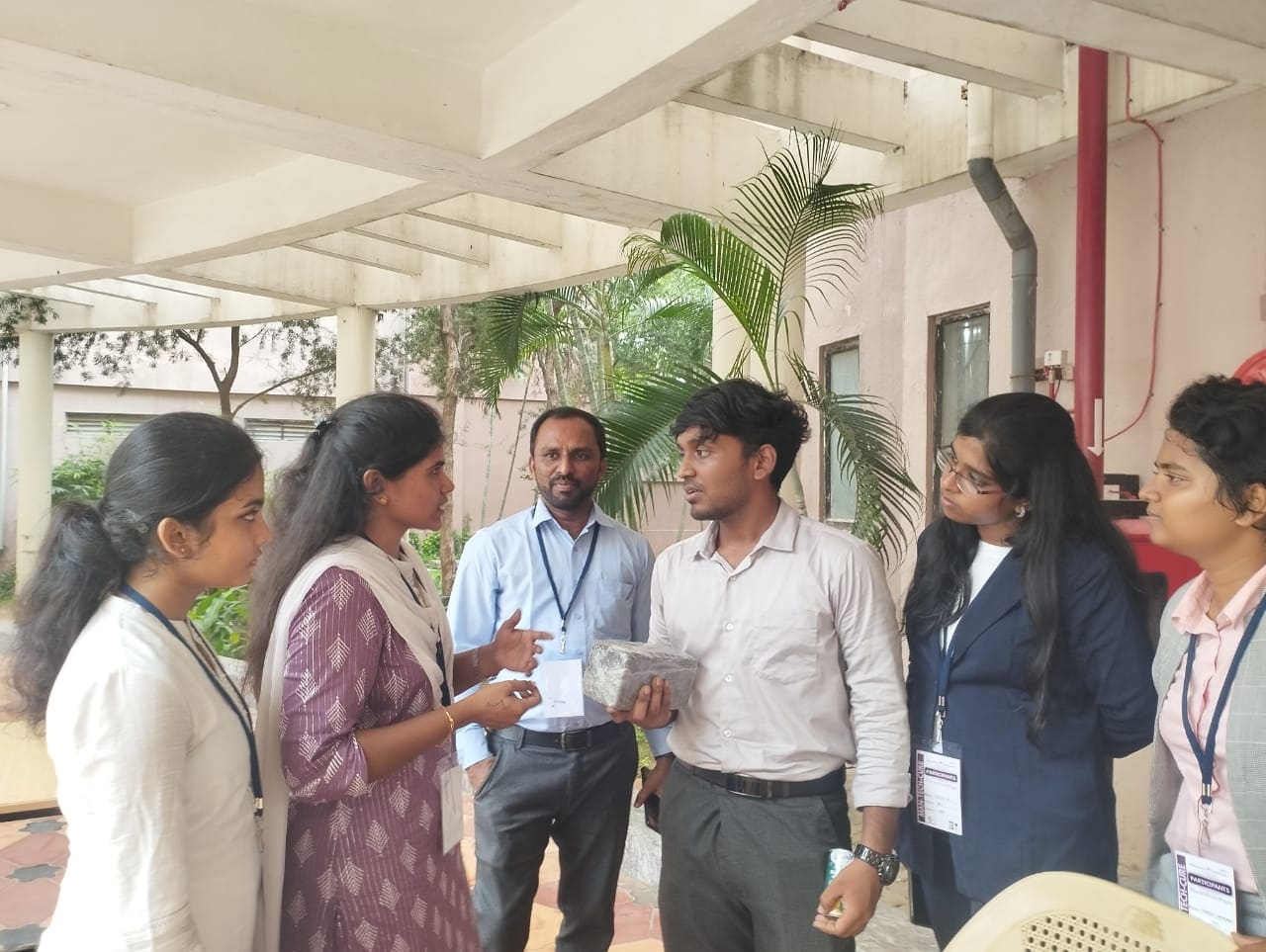
Internal Project Review
Students presenting a working prototype to the faculty panel — the shortlisting stage that feeds the UG research publication pipeline.
2024
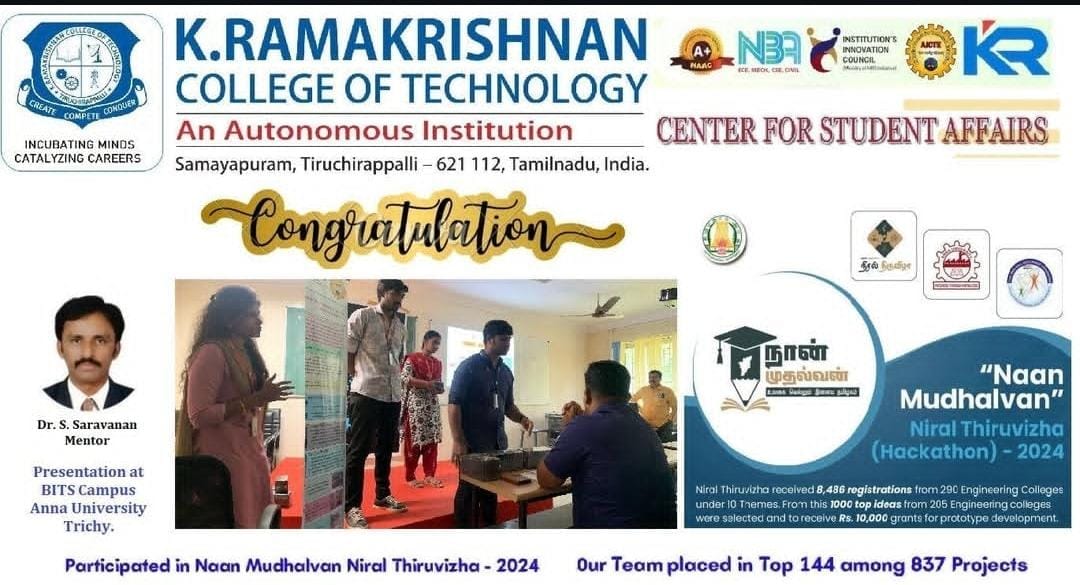
Naan Mudhalvan Niral Thiruvizha Hackathon
The state hackathon drew 8,486 registrations from 290 engineering colleges across 10 themes; 1,000 top ideas from 205 colleges received ₹10,000 prototype development grants.
Achievements
What our students brought home.
Prizes at state and national expos, startup recognition, and an institutional innovation rating — outcomes of projects mentored through the Centre.
2023–24
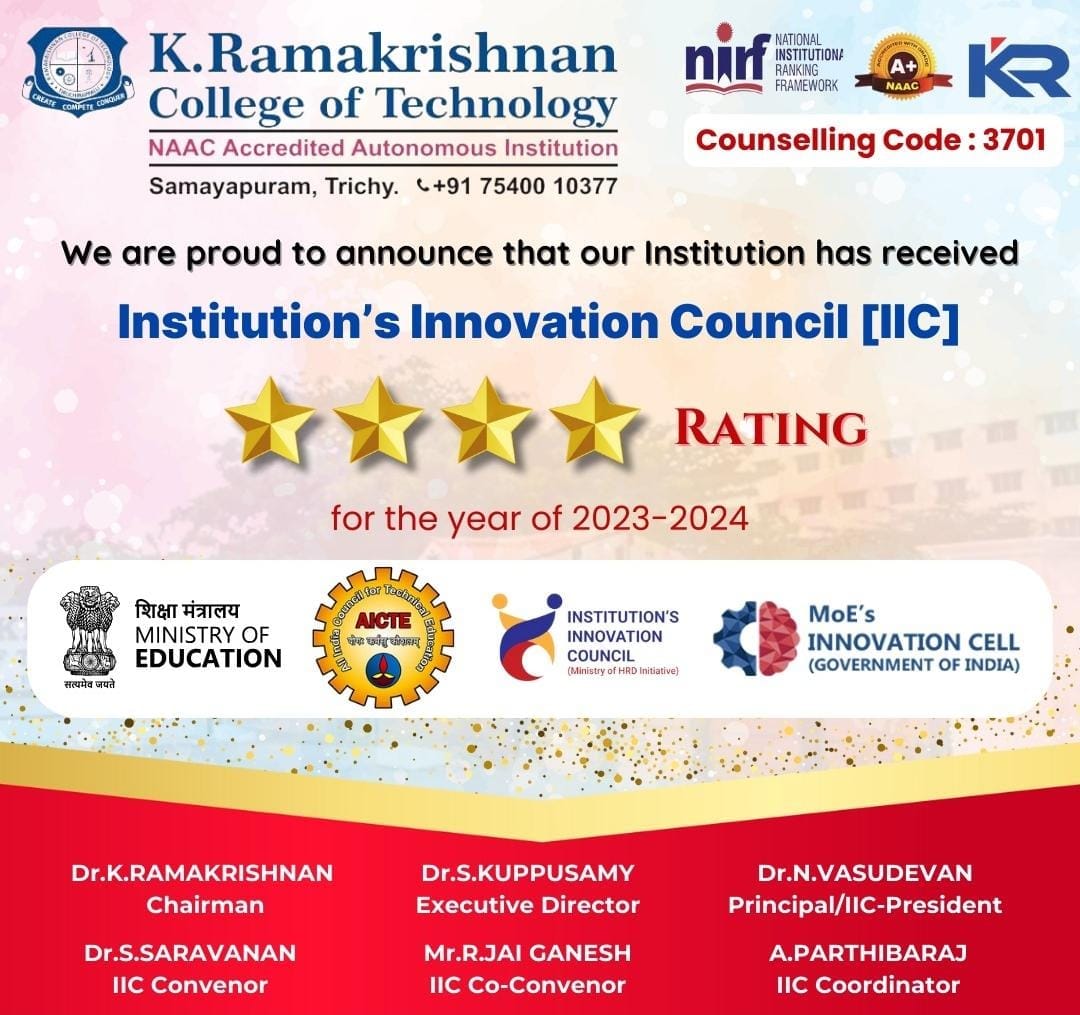
IIC 4-Star Rating
The institution received a four-star Institution's Innovation Council rating from MoE's Innovation Cell. IIC Convenor Dr. S. Saravanan, Co-Convenor Mr. R. Jai Ganesh, Coordinator Mr. A. Parthibaraj.
Startup Chennai
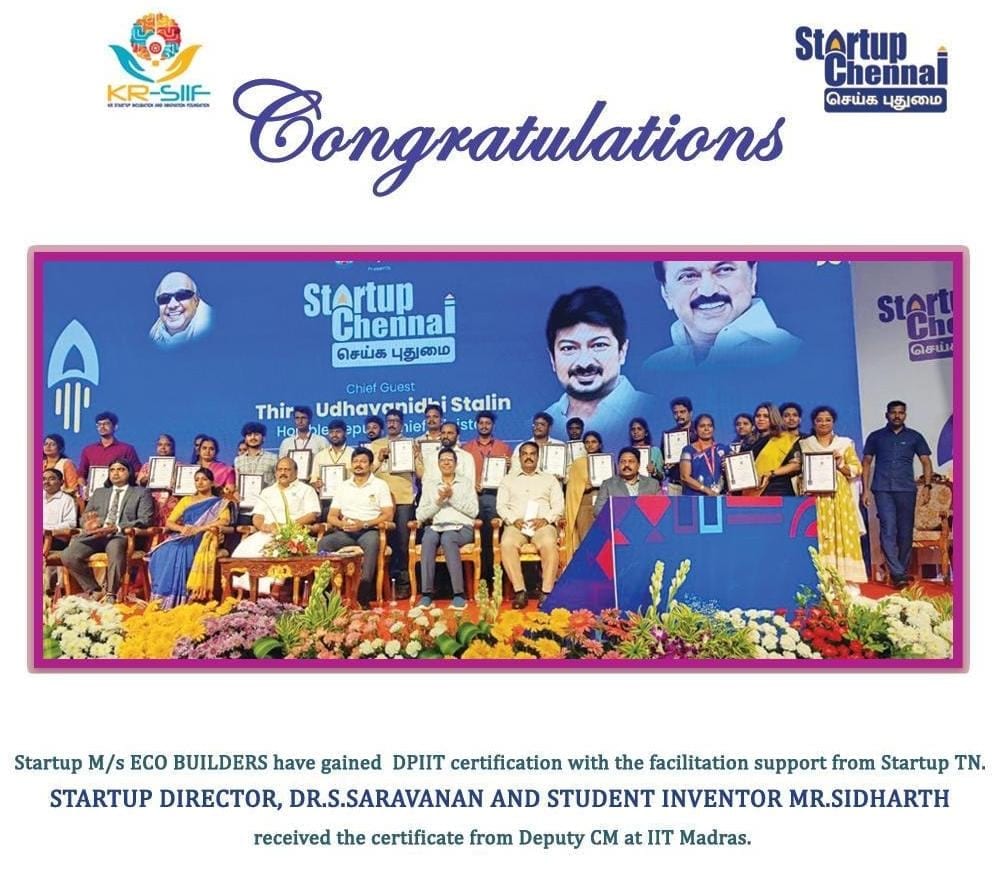
DPIIT Certification — M/s Eco Builders
The student startup gained DPIIT certification with facilitation support from StartupTN. Startup Director Dr. S. Saravanan and student inventor Mr. Sidharth received the certificate from the Deputy Chief Minister at IIT Madras.
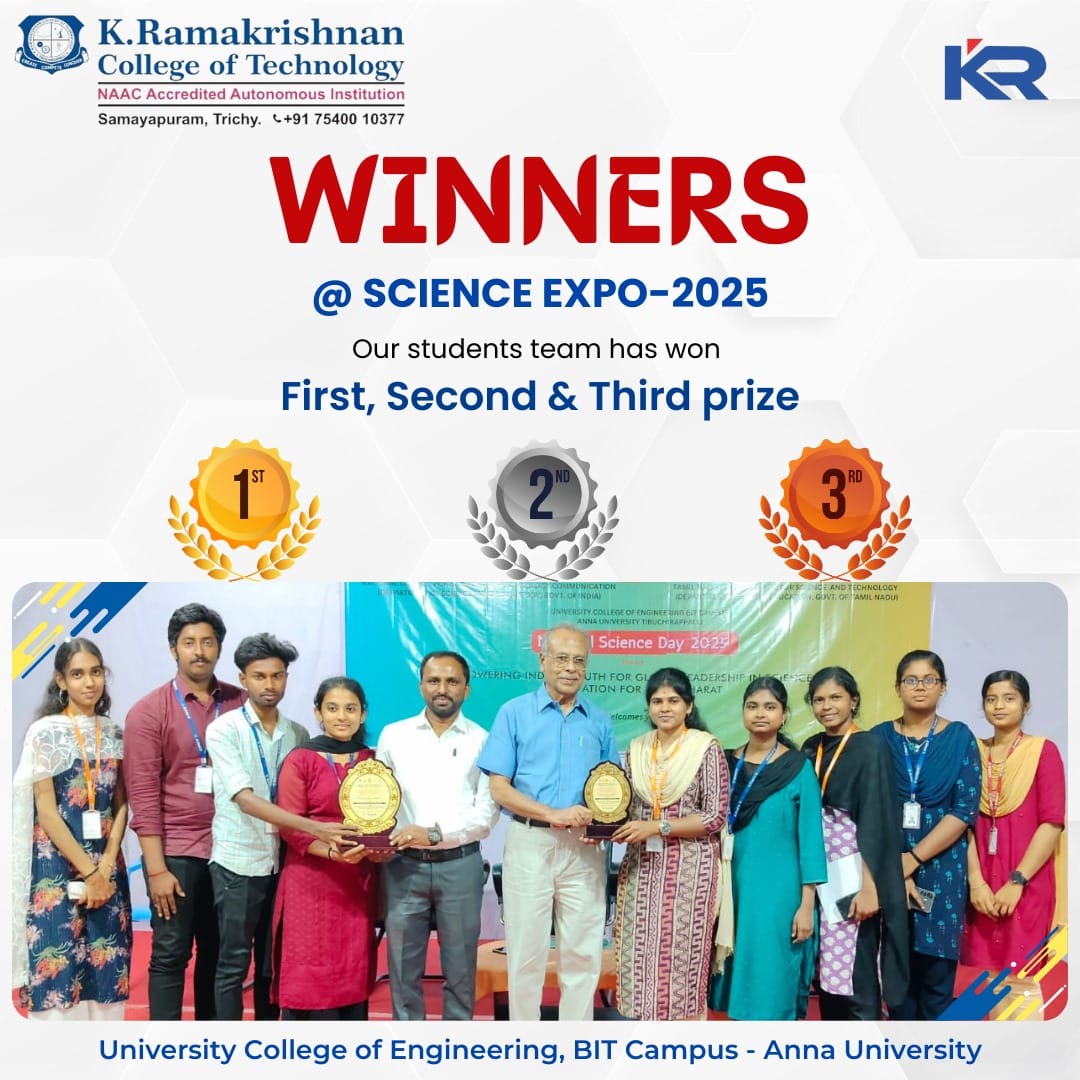
February 2025
First, Second & Third Prize — Science Expo 2025
Student teams swept the top three prizes at Science Expo 2025, University College of Engineering, BIT Campus, Anna University.
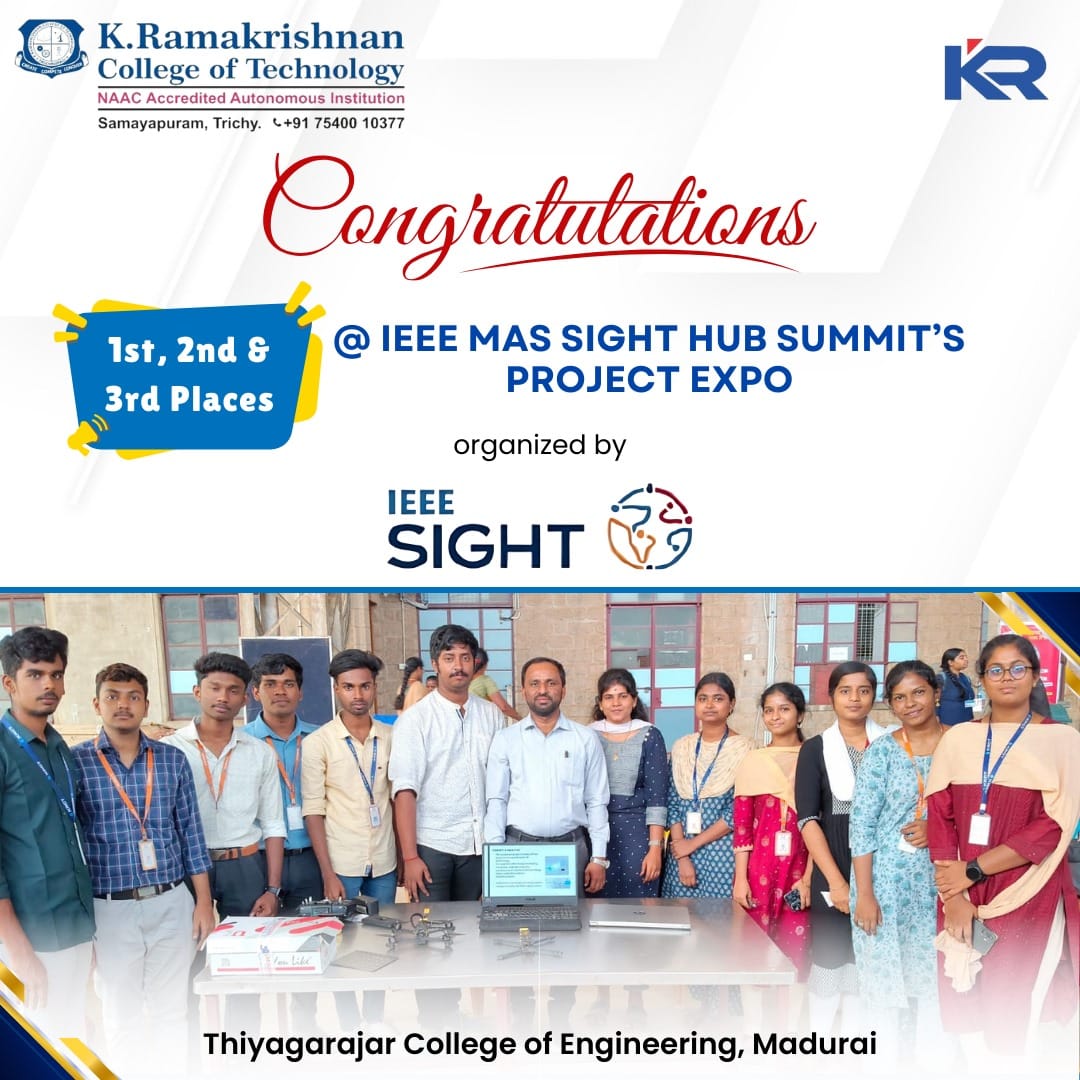
February 2025
First, Second & Third Places — IEEE SIGHT Project Expo
Students took all three places at the IEEE MAS SIGHT Hub Summit's Project Expo, Thiagarajar College of Engineering, Madurai.
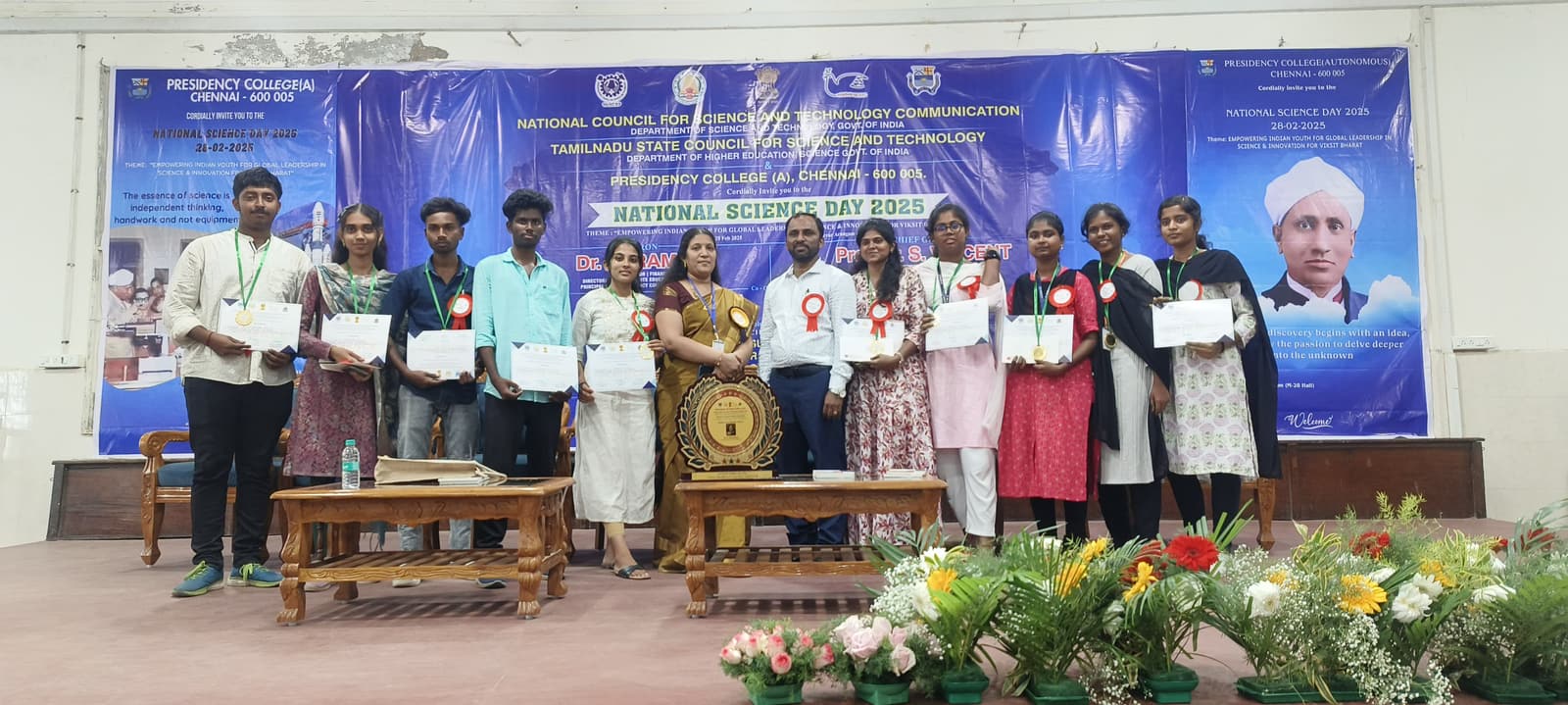
National Science Day
National Science Day Awards
Students received certificates at the National Science Day event organized by the National Council for Science & Technology Communication and the Tamil Nadu State Council for Science and Technology at Presidency College, Chennai.
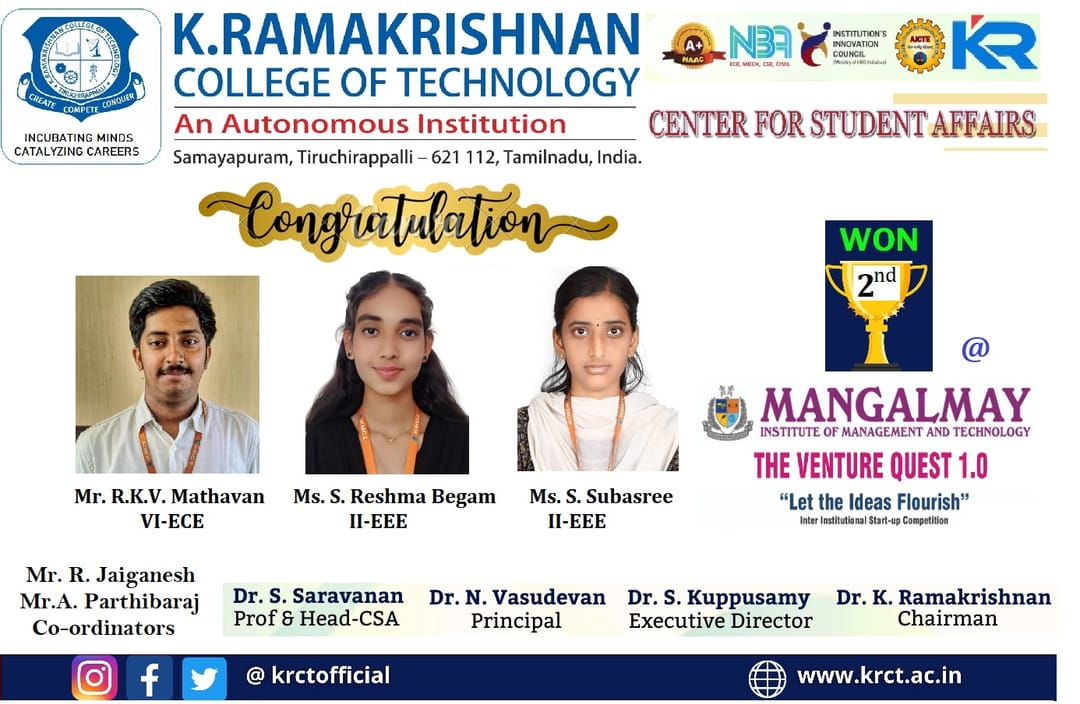
August 2024
Second Place — The Venture Quest 1.0
Mr. R. K. V. Mathavan (ECE), Ms. S. Reshma Begam (II EEE) and Ms. S. Subasree (II EEE) won second place at the inter-institutional start-up competition “Let the Ideas Flourish”, Mangalmay Institute of Management and Technology. Coordinators: Mr. R. Jai Ganesh and Mr. A. Parthibaraj.
2024
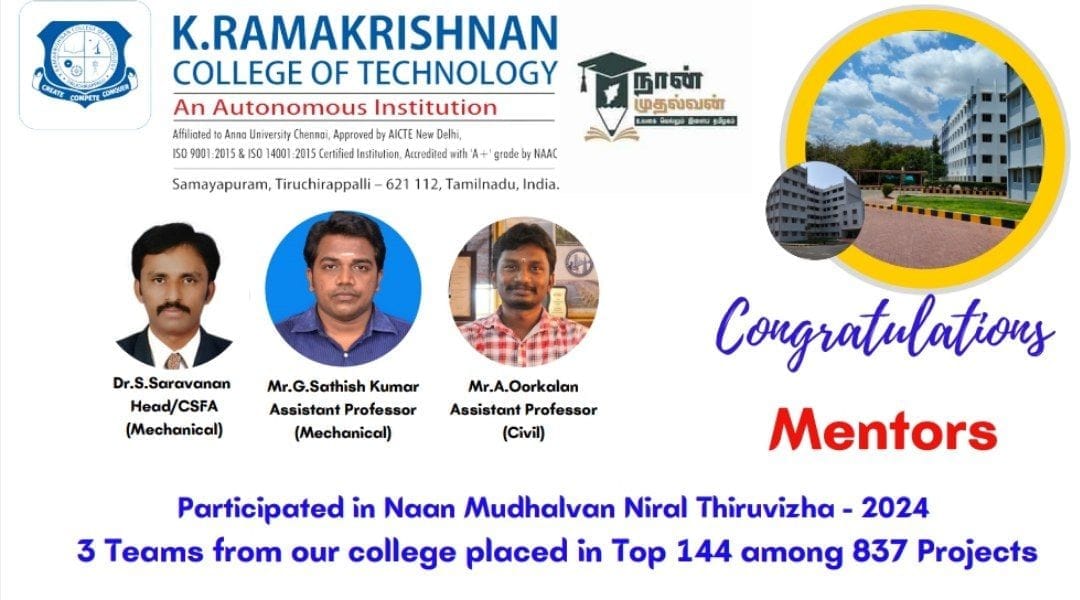
Top 144 of 837 — Naan Mudhalvan Niral Thiruvizha
Three teams from the college placed in the top 144 among 837 projects. Mentors: Dr. S. Saravanan (Mechanical), Mr. G. Sathish Kumar (Mechanical) and Mr. A. Oorkolan (Civil).
Yuva Utsav
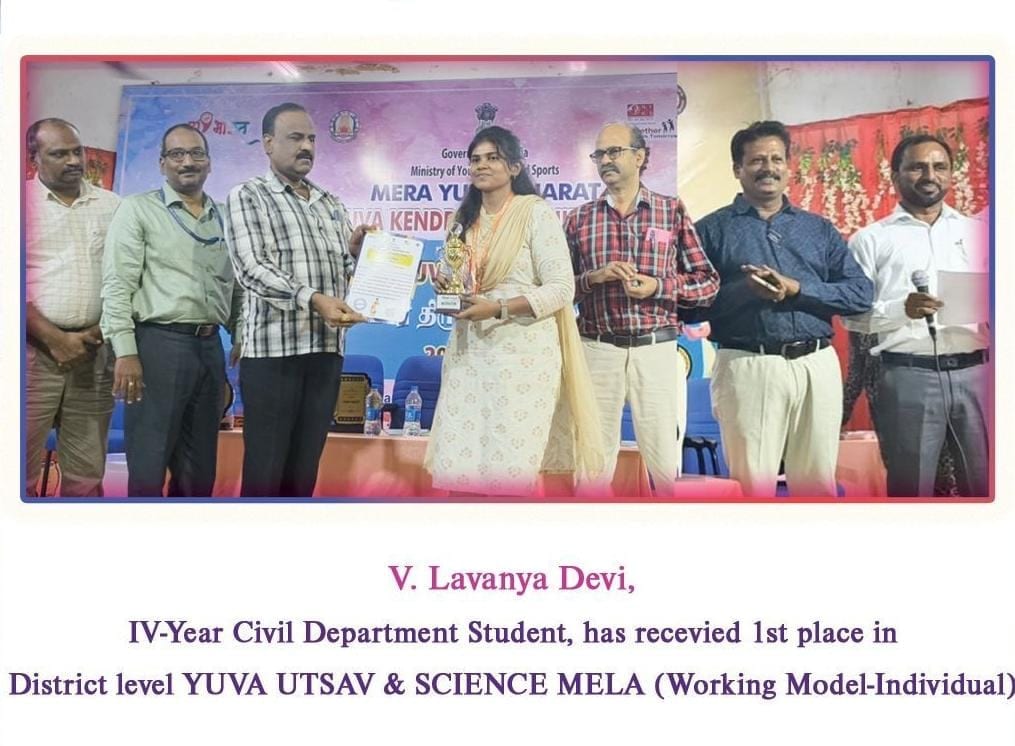
First Place — Working Model (Individual)
V. Lavanya Devi, fourth-year Civil Engineering, took first place in the district-level Yuva Utsav & Science Mela.
Yuva Utsav
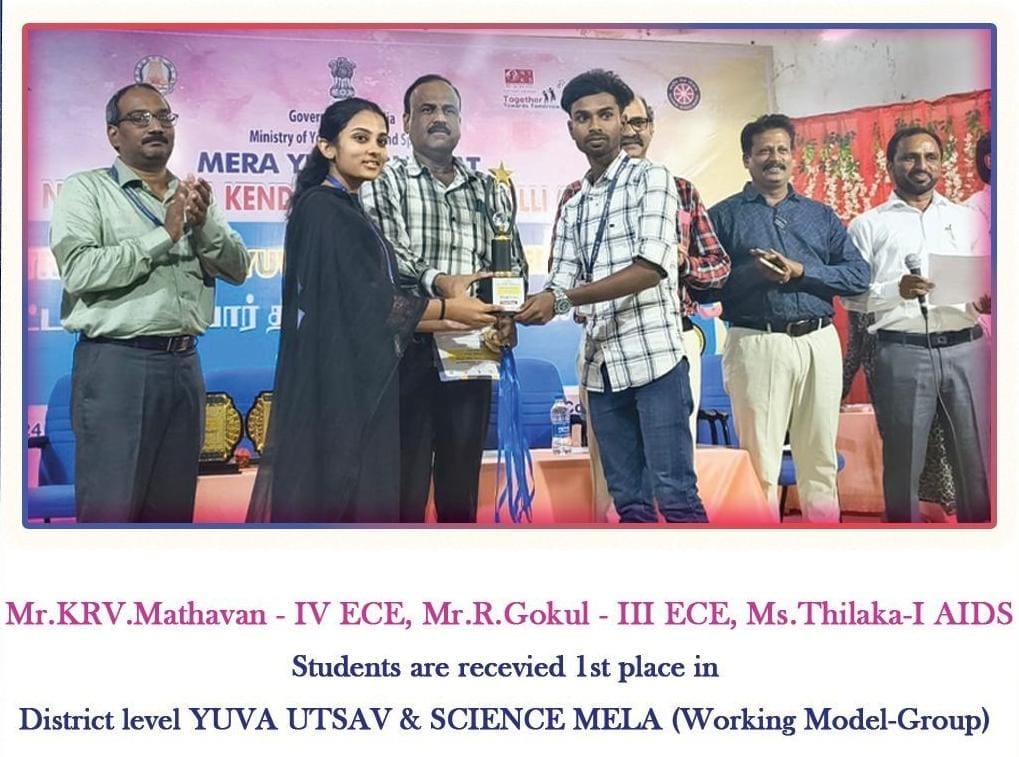
First Place — Working Model (Group)
Mr. K. R. V. Mathavan (IV ECE), Mr. R. Gokul (III ECE) and Ms. Thilaka (I AI & DS) took first place in the district-level Yuva Utsav & Science Mela.
Contact
Talk to the Centre.
Industry partners, prospective collaborators, faculty and students — reach the IIPC office directly.
Dr. S. Saravanan, M.E., Ph.D.
Professor & Head, IIPC–CFFA
K. Ramakrishnan College of Technology (Autonomous)Samayapuram, Trichy – 621 112
Tamil Nadu, India